TIMELINE
14 Weeks
To Working Testbed

Autonomous Driving & AI
TIMELINE
To Working Testbed
DETECTION
Traffic Sign & Obstacle
RL MODEL
Adaptive Decision-Making
SCENARIOS
Urban & Highway Tested
SUCCESS
Lane-Keep Completion Rate
When the risks of reality stall the speed of innovation
Testing autonomous systems on physical roads is prohibitively dangerous and expensive. Every real-world failure carries a cost that slows the essential validation needed for safe, widespread deployment.
The Intellema Design Challenge
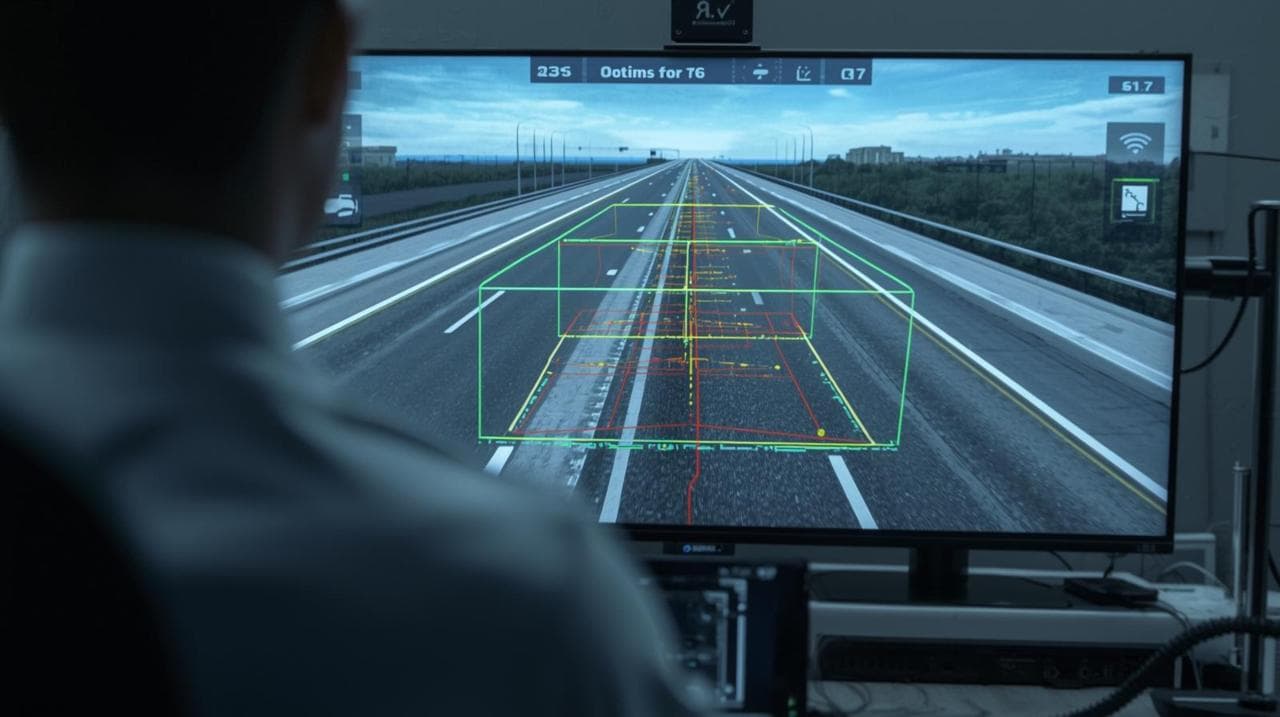
Developing autonomous vehicles requires rigorous validation that is often too risky or costly to perform in real-world environments. This project utilized the CARLA simulator to create a high-fidelity testbed for evaluating computer vision and reinforcement learning models safely.
The framework integrated YOLOv8 and LaneNet to handle real-time perception tasks like obstacle avoidance and lane tracking. The system optimized decision-making for complex maneuvers, ensuring robust performance across diverse urban and highway scenarios.